Black and White Moroccan Digital Paper Pack
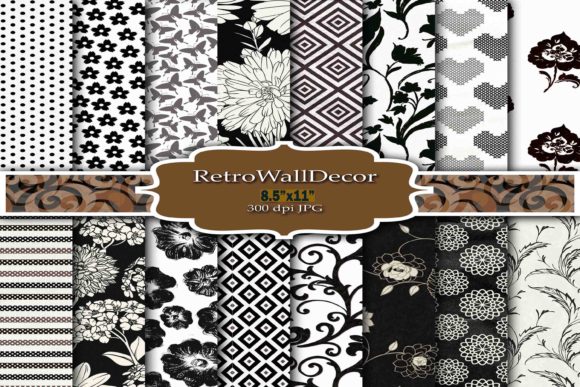
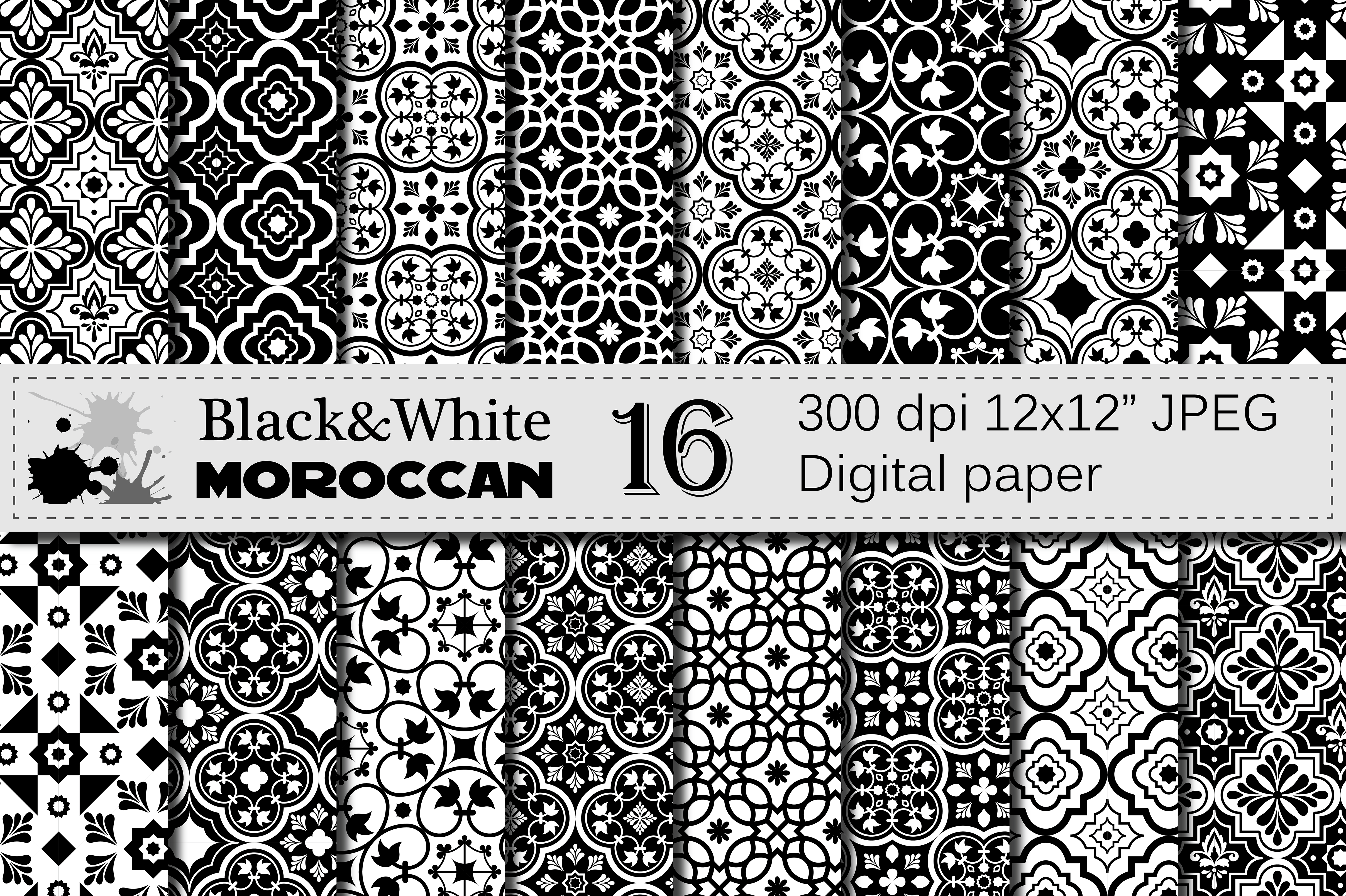
Designers, educators, small business owners, and content creators often face a quiet but persistent challenge: finding textures and backgrounds that feel intentional—not generic, not overused, and never visually noisy. The Black and White Moroccan Digital Paper Pack answers that need with precision. It’s a curated set of 16 high-resolution JPG files—each 12″ x 12″ at 300 DPI—featuring authentic Moroccan-inspired patterns rendered in crisp monochrome. These aren’t clipart or AI-generated abstractions. They’re digitally crafted interpretations of traditional zellige tilework, geometric mashrabiya latticework, and hand-drawn arabesque motifs—stripped of color to emphasize structure, contrast, and rhythm.
This pack fits most naturally into the *asset preparation phase* of any visual project. Before opening Photoshop or Canva, before laying out a newsletter or designing a workshop handout, you’ve already decided on tone, audience, and message. That’s when texture matters—not as decoration, but as reinforcement. A black-and-white Moroccan pattern subtly signals craftsmanship, heritage, and thoughtful design without saying a word. It works because it’s legible at scale, neutral enough to support text, and distinct enough to avoid blending into background noise.
Integration starts with compatibility—and this pack excels there. Because all files are standard JPGs at industry-standard print resolution, they drop seamlessly into nearly every workflow: Adobe Creative Cloud (Photoshop, Illustrator, InDesign), Affinity apps, Canva Pro, Figma (via image import), Google Slides, Microsoft PowerPoint, and even desktop publishing tools like Scribus or QuarkXPress. No plugins, no converters, no waiting for cloud sync. You download, unzip, and use—often within 90 seconds of purchase. That speed matters when you’re juggling client revisions, lesson planning deadlines, or last-minute social media graphics.
Where it adds real value is in consistency across touchpoints. Imagine launching a wellness brand rooted in mindful tradition. You use one paper as the background for your printable habit tracker (PDF), another as a subtle overlay on your Instagram Story highlight cover, and a third—cropped and tiled—as the border for a blog post sidebar. All share the same visual DNA: sharp geometry, balanced negative space, and cultural resonance—without requiring custom illustration or licensing fees. That cohesion builds recognition faster than standalone logos alone.
For educators and curriculum designers, these papers serve double duty: aesthetic foundation and cognitive anchor. A black-and-white Moroccan pattern behind a vocabulary list or reflection prompt doesn’t distract—it frames. The repetition and symmetry gently guide the eye without competing for attention. Unlike busy watercolor or grunge textures, these patterns support readability while adding quiet sophistication. One teacher reported using them as consistent backdrops for weekly printable worksheets—students began associating the visual rhythm with “focus time,” reinforcing routine through subtle environmental cues.
Small business owners and solopreneurs benefit from efficiency gains in branding execution. Instead of commissioning custom pattern design (which can cost $300–$800 and take weeks), they get production-ready assets instantly. More importantly, they retain full usage rights—no attribution required, no platform restrictions. You can embed them in client deliverables, print them on letterhead or packaging, or use them as base layers in digital product mockups. That flexibility means one purchase supports multiple revenue streams: physical products, digital downloads, online courses, and branded merchandise—all without legal ambiguity or extra licensing steps.
Usability hinges on organization—and this pack delivers clarity. Files are named descriptively (Moroccan_Geometric_Symmetry_01.jpg, Zellige_Inspired_Tile_07.jpg) rather than cryptically numbered. That makes scanning thumbnails in a folder or asset library fast. If you use naming conventions aligned with your own system (e.g., adding “BG-” prefixes or color codes), renaming takes seconds in bulk—no renaming tools needed. For teams, storing the folder in a shared drive with clear naming reduces version confusion and eliminates “Which one was the tighter grid?” debates during collaborative reviews.
Quality control is built in—not assumed. At 300 DPI and 12″ x 12″, each file scales cleanly up to A3 or tabloid size for large-format printing (think posters, presentation backdrops, or trade show banners). They also downscale elegantly: crop a 400×400 px section for a website favicon background or email header without pixelation. Test one at 50% opacity over a light gray text box—you’ll see how the contrast holds up without washing out or overwhelming. That reliability saves time in proofing cycles and avoids mid-project swaps when an asset fails at output.
Long-term use depends on intentionality—not just access. These papers aren’t meant to be applied universally. They work best where restraint supports meaning: a minimalist wedding invitation suite, a conference program with cultural context, a mindfulness journal layout, or a boutique hotel’s digital guest guide. Overuse dilutes impact. Try limiting yourself to one pattern per project—or better yet, one per quarter—to preserve their distinctiveness. When you do reach for them, it’s because the geometry serves the message—not the other way around.
Preparation is minimal, but thoughtful. Before downloading, consider your most frequent use cases: Are you printing physical products? Then verify your printer’s maximum sheet size and bleed requirements—these files include no bleed, so add it manually if needed. Designing for web? Save optimized versions (e.g., 150 DPI, compressed JPG) to keep page load times low. Creating layered Canva templates? Import one paper as a background, lock the layer, then build text and icons on top—so you can duplicate the template without re-importing assets each time.
It’s also worth noting what this pack doesn’t do—and why that’s useful. It doesn’t include PNGs with transparency (so no quick drop shadows or layer blending without manual masking). It doesn’t offer editable vector files (so no resizing individual motifs). And it doesn’t come with matching fonts or color palettes. That’s by design. This is a focused tool—not an all-in-one suite. Its strength lies in doing one thing exceptionally well: delivering ready-to-deploy, culturally grounded texture that enhances clarity instead of obscuring it.
Real-world integration looks different for everyone—but here are three concrete examples:
- A freelance graphic designer uses one paper as a textured base for a client’s artisanal olive oil label. She overlays a muted gold foil effect in Photoshop, then exports CMYK-ready PDFs for the printer—no back-and-forth about resolution or scaling.
- An online course creator applies a second paper as a subtle tiled background in her Notion course dashboard. It creates visual continuity between modules without triggering motion sensitivity—unlike animated GIFs or parallax scrolling.
- A nonprofit program coordinator prints a third paper on recycled kraft paper to create tactile, culturally resonant handouts for a community storytelling workshop—reinforcing themes of heritage and intergenerational knowledge without needing translation or explanation.
Ultimately, the Black and White Moroccan Digital Paper Pack earns its place in your toolkit not through novelty, but through quiet utility. It’s the kind of resource you forget you have—until you open a blank document and realize the right texture is already waiting. No searching, no second-guessing, no compromise. Just clarity, consistency, and craft—ready when your next project is.