Light Marbling Papers: Elegant, Textured Design Sheets
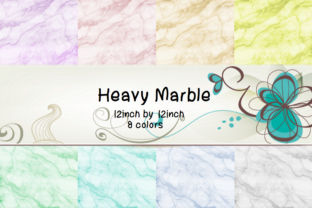
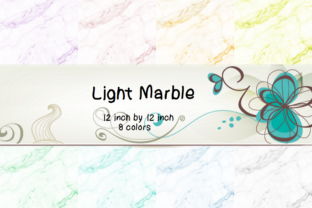
If you’ve ever held a sheet of handmade marbled paper—soft yet substantial, subtly shifting in light—you know the quiet power of tactile sophistication. Light Marbling Papers captures that essence in a thoughtfully curated, ready-to-use format: eight 12-inch by 12-inch sheets, each bearing a distinct, delicate marbling pattern in Pink, Red, Orange, Yellow, Green, Blue-Green, Blue, and Black and White. These aren’t bold, high-contrast swirls meant for dramatic statements. Instead, they’re soft-edged, airy, and luminous—designed to suggest movement without overwhelming, elegance without formality.
Their visual personality sits comfortably between artisanal craft and modern minimalism. Think watercolor bleeding just enough to feel alive, but controlled enough to hold structure. The marbling is light—not washed out, but intentionally restrained—so it complements rather than competes. That makes Light Marbling Papers unusually versatile: it reads as both nostalgic and contemporary, warm and precise, decorative and functional.
Where These Sheets Earn Their Keep
Designers reach for Light Marbling Papers when they need texture with intention—not filler, not flourish, but quiet depth. In branding, they shine as background layers behind clean logotypes or as subtle liners inside premium packaging boxes. A small-batch candle brand might use the Blue-Green sheet as the interior lining of a gift box; a boutique stationery line could print foil-stamped business cards directly onto the Black and White variant for layered contrast.
In editorial design, these sheets work beautifully as section dividers in printed lookbooks or as full-bleed backgrounds for single-page features—especially where photography or illustration needs gentle framing, not visual noise. For digital creators, scanning or photographing a sheet (with soft lighting and slight shadow) yields high-resolution textures perfect for social media banners, email headers, or Canva templates. Bloggers and content creators use them as backdrops for flat-lay product photos—say, a ceramic mug resting on the Yellow sheet, its warmth echoed in the marbling’s soft halo.
They’re also quietly effective in personal projects that carry commercial weight: wedding invitations, artisanal product labels, limited-run zines, or even as custom endpapers in hand-bound journals sold through Etsy or independent bookshops. Because each sheet is 12×12 inches, they’re large enough to cut into standard cardstock sizes (5×7, 4×6, A6) with generous margins—or to use whole for presentation boards and mood boards.
Readability, Hierarchy, and the Subtle Psychology of Texture
Texture influences perception more than many realize. Unlike bold patterns or heavy grain, Light Marbling Papers introduces just enough visual variation to signal care and craftsmanship—without triggering cognitive load. That matters for audience engagement: studies in visual processing show that low-contrast, organic textures increase dwell time on physical materials because they invite closer looking, not faster skimming.
For brand consistency, these sheets offer a unifying thread across touchpoints. Using the same Green marbled sheet for your invoice background, packaging liner, and thank-you card creates subconscious continuity—even if the viewer never names the pattern. It builds recognition through repetition of feeling, not just form.
Crucially, they support readability rather than undermine it. Because the marbling is light and diffuse—not sharply defined or overly saturated—text placed over them (with appropriate contrast and font weight) remains legible. A crisp sans serif like Inter or a refined serif like Adobe Garamond works especially well here: clean type against soft texture creates a natural hierarchy. Just avoid thin weights or light gray text on the lighter sheets (Pink, Yellow, White); test print or screen mockups first.
Practical Tips Before You Cut or Click
Start by holding a sheet up to natural light. Notice how the marbling shifts—not dramatically, but perceptibly—as the angle changes. That’s intentional. It means lighting matters in final use: harsh overhead LEDs flatten the effect; diffused window light enhances it.
When evaluating fit for your project, ask two questions: Does this texture elevate the message—or distract from it? and Does it align with the emotional tone I want to convey? The Orange sheet feels inviting and approachable; the Blue-Green evokes calm precision; Black and White carries quiet authority. Let that guide your choice—not just color theory, but context.
Test pairings early. Print a small sample with your chosen typography, then step back three feet. Does the text still read clearly? Does the marbling feel like part of the composition—or like an afterthought? If you’re designing for print, request a physical swatch pack first. Screen previews rarely capture the subtlety of light marbling.
Commercial licensing is straightforward: these are design assets intended for professional use, including client work and resale items (e.g., printed stationery, packaged goods). No attribution is required, but keep in mind that while the marbling itself isn’t copyrighted, derivative digital assets (like selling the scanned texture as a standalone Photoshop brush) fall outside standard usage terms.
A Few Real-World Observations
We’ve seen Light Marbling Papers used most effectively when treated as a supporting actor—not the lead. One marketing agency used the Red sheet as a subtle background layer beneath semi-transparent client logos on a pitch deck cover; the warmth unified the layout without shouting. A children’s book illustrator scanned the Yellow sheet at 300 DPI and used it as a textured overlay on chapter title pages—adding whimsy without clutter.
One consistent note from users: the Black and White sheet is often underestimated. Its contrast is gentle, not stark—ideal for brands avoiding cold minimalism but still wanting clarity. Paired with warm-toned ink or foil, it delivers sophistication with warmth.
Finally, remember that marbling is inherently variable—even within one sheet. There will be subtle shifts in density and flow. That’s not inconsistency; it’s authenticity. Embrace it. Let those variations become part of your story, not something to edit out.